A Philosophy Reading List
Explore a curated philosophy reading list featuring essential books like Michel Foucault's *Madness and Civilization* and Karl Popper's *The Open Society and Its Enemies*, perfect for anyone seeking thought-provoking philosophical texts and classic reads.

Book
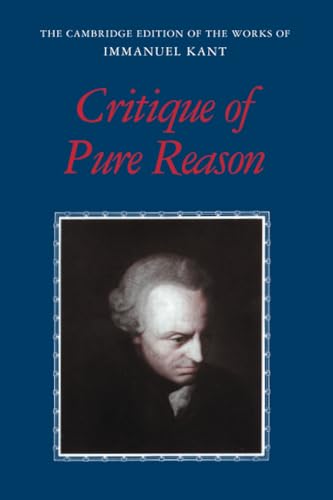
Critique of Pure Reason (The Cambridge Edition of the Works of Immanuel Kant)
No summary available.

Book
Madness and Civilization
by Michel Foucault
Michel Foucault examines the archeology of madness in the West from 1500 to 1800 - from the late Middle Ages, when insanity was still considered part of everyday life and fools and lunatics walked the streets freely, to the time when such people began to be considered a threat, asylums were first built, and walls were erected between the "insane" and the rest of humanity.

Book
The Open Society and Its Enemies: The spell of Plato
by Karl Raimund Popper
Popper was born in 1902 to a Viennese family of Jewish origin. He taught in Austria until 1937, when he emigrated to New Zealand in anticipation of the Nazi annexation of Austria the following year, and he settled in England in 1949. Before the annexation, Popper had written mainly about the philosophy of science, but from 1938 until the end of the Second World War he focused his energies on political philosophy, seeking to diagnose the intellectual origins of German and Soviet totalitarianism. The Open Society and Its Enemies was the result. In the book, Popper condemned Plato, Marx, and Hegel as "holists" and "historicists"--a holist, according to Popper, believes that individuals are formed entirely by their social groups; historicists believe that social groups evolve according to internal principles that it is the intellectual's task to uncover. Popper, by contrast, held that social affairs are unpredictable, and argued vehemently against social engineering. He also sought to shift the focus of political philosophy away from questions about who ought to rule toward questions about how to minimize the damage done by the powerful. The book was an immediate sensation, and--though it has long been criticized for its portrayals of Plato, Marx, and Hegel--it has remained a landmark on the left and right alike for its defense of freedom and the spirit of critical inquiry.