An Overview of Japanese History
Explore the rich tapestry of Japanese history through this curated reading list, featuring iconic works like The Last Samurai and The Pillow Book of Sei Shōnagon.





Book
The Last Samurai
by Mark Ravina
The dramatic arc of Saigo Takamori's life, from his humble origins as a lowly samurai, to national leadership, to his death as a rebel leader, has captivated generations of Japanese readers and now Americans as well - his life is the inspiration for a major Hollywood film, The Last Samurai, starring Tom Cruise and Ken Watanabe. In this vibrant new biography, Mark Ravina, professor of history and Director of East Asian Studies at Emory University, explores the facts behind Hollywood storytelling and Japanese legends, and explains the passion and poignancy of Saigo's life. Known both for his scholarly research and his appearances on The History Channel, Ravina recreates the world in which Saigo lived and died, the last days of the samurai. The Last Samurai traces Saigo's life from his early days as a tax clerk in far southwestern Japan, through his rise to national prominence as a fierce imperial loyalist. Saigo was twice exiled for his political activities -- sent to Japan's remote southwestern islands where he fully expected to die. But exile only increased his reputation for loyalty, and in 1864 he was brought back to the capital to help his lord fight for the restoration of the emperor. In 1868, Saigo commanded his lord's forces in the battles which toppled the shogunate and he became and leader in the emperor Meiji's new government. But Saigo found only anguish in national leadership. He understood the need for a modern conscript army but longed for the days of the traditional warrior. Saigo hoped to die in service to the emperor. In 1873, he sought appointment as envoy to Korea, where he planned to demand that the Korean king show deference to the Japanese emperor, drawing his sword, if necessary, top defend imperial honor. Denied this chance to show his courage and loyalty, he retreated to his homeland and spent his last years as a schoolteacher, training samurai boys in frugality, honesty, and courage. In 1876, when the government stripped samurai of their swords, Saigo's followers rose in rebellion and Saigo became their reluctant leader. His insurrection became the bloodiest war Japan had seen in centuries, killing over 12,000 men on both sides and nearly bankrupting the new imperial government. The imperial government denounced Saigo as a rebel and a traitor, but their propaganda could not overcome his fame and in 1889, twelve years after his death, the government relented, pardoned Saigo of all crimes, and posthumously restored him to imperial court rank. In THE LAST SAMURAI, Saigo is as compelling a character as Robert E. Lee was to Americans-a great and noble warrior who followed the dictates of honor and loyalty, even though it meant civil war in a country to which he'd devoted his life. Saigo's life is a fascinating look into Japanese feudal society and a history of a country as it struggled between its long traditions and the dictates of a modern future.

Book
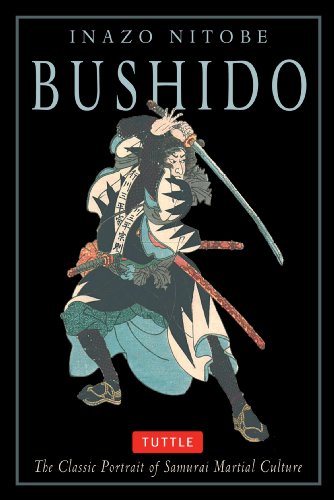
Code of the Samurai
by Thomas Cleary
A powerful contemporary translation of the classic treatise of the Way of the Warrior! Code of the Samurai is a four-hundred-year-old explication of the rules and expectations embodied in Bushido, the Japanese way of the warrior. Bushido has played a major role in shaping the behavior of modern Japanese government, corporations, society, and individuals, as well as in shaping the modern martial arts within Japan and internationally. The Japanese original of this book, Bushido Shoshinshu, has been one of the primary sources on the tenets of Bushido, a way of thought that remains fascinating and relevant to the modern world, East and West. With a clear, conversational narrative by Thomas Cleary, one of the foremost translators of the wisdom of Asia, and powerfully evocative line drawings by master illustrator Oscar Ratti, this book is indispensable to the corporate executive, student of the Asian Culture, and martial artist.

Book
The Pillow Book of Sei Sh?nagon
by Sei Shōnagon
One of the great classics of Japanese literature, "The Pillow Book of Sei Shonagon" is by far our most detailed source of factual material on life in eleventh-century Japan at the height of Heian culture.

Book
The Forty-seven Ronin Story
by John Allyn
Japan underwent tumultuous changes in the eighteenth century. The merchant class was rising in power, and the privileges of the professional warriors, or "samurai", were disappearing. The 47 Ronin Story is the classic story of Lord Asano of Ako and one of the bloodiest vendettas in Japan's feudal history. In 1701 in Edo, Japan, Lord Asano of Ako lashed out at a corrupt court official and set in motion a chain of events that shocked the country and brought the Shogun himself to a legal and moral impasse. When it was over, there emerged the most unlikely set of heroes-the forty-seven ronin, or "ex-samurai", of Ako.

Book
Musashi
by 吉川英治
Musashi Miyamoto fights in 1600 for the losing side of the battle at Sekigahara when the Tokugawa Shogunate begins its reign.