BEST CONTEMORARY ESSAY ARTISTS
Discover the best contemporary essay artists with this curated list of thought-provoking books, from Katie Roiphe’s *Uncommon Arrangements* to Bill Bryson’s witty *A Walk in the Woods*.



Book
Uncommon Arrangements
by Katie Roiphe
Katie Roiphe’s stimulating work has made her one of the most talked about cultural critics of her generation. Now this bracing young writer delves deeply into one of the most layered of subjects: marriage. Drawn in part from the private memoirs, personal correspondence, and long-forgotten journals of the British literary community from 1910 to the Second World War, here are seven “marriages à la mode”—each rising to the challenge of intimate relations in more or less creative ways. Jane Wells, the wife of H.G., remained his rock, despite his decade-long relationship with Rebecca West (among others). Katherine Mansfield had an irresponsible, childlike romance with her husband, John Middleton Murry, that collapsed under the strain of real-life problems. Vera Brittain and George Gordon Catlin spent years in a “semidetached” marriage (he in America, she in England). Vanessa Bell maintained a complicated harmony with the painter Duncan Grant, whom she loved, and her husband, Clive. And her sister Virginia Woolf, herself no stranger to marital particularities, sustained a brilliant running commentary on the most intimate details of those around her. Every chapter revolves around a crisis that occurred in each of these marriages—as serious as life-threatening illness or as seemingly innocuous as a slightly tipsy dinner table conversation—and how it was resolved…or not resolved. In these portraits, Roiphe brilliantly evokes what are, as she says, “the fluctuations and shifts in attraction, the mysteries of lasting affection, the endurance and changes in love, and the role of friendship in marriage.” The deeper mysteries at stake in all relationships.




Book
A Short History of Nearly Everything
by Bill Bryson
One of the world’s most beloved writers and New York Times bestselling author of A Walk in the Woods and The Body takes his ultimate journey—into the most intriguing and intractable questions that science seeks to answer. In A Walk in the Woods, Bill Bryson trekked the Appalachian Trail—well, most of it. In A Sunburned Country, he confronted some of the most lethal wildlife Australia has to offer. Now, in his biggest book, he confronts his greatest challenge: to understand—and, if possible, answer—the oldest, biggest questions we have posed about the universe and ourselves. Taking as territory everything from the Big Bang to the rise of civilization, Bryson seeks to understand how we got from there being nothing at all to there being us. To that end, he has attached himself to a host of the world’s most advanced (and often obsessed) archaeologists, anthropologists, and mathematicians, travelling to their offices, laboratories, and field camps. He has read (or tried to read) their books, pestered them with questions, apprenticed himself to their powerful minds. A Short History of Nearly Everything is the record of this quest, and it is a sometimes profound, sometimes funny, and always supremely clear and entertaining adventure in the realms of human knowledge, as only Bill Bryson can render it. Science has never been more involving or entertaining.

Book
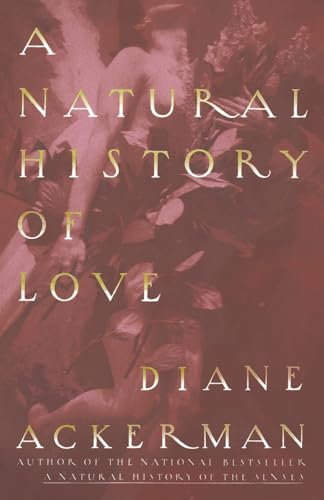
A Natural History of the Senses
by Diane Ackerman
Diane Ackerman's lusciously written grand tour of the realm of the senses includes conversations with an iceberg in Antarctica and a professional nose in New York, along with dissertations on kisses and tattoos, sadistic cuisine and the music played by the planet Earth. “Delightful . . . gives the reader the richest possible feeling of the worlds the senses take in.” —The New York Times

Book
How to Be Alone
by Jonathan Franzen
From the National Book Award-winning author of The Corrections, a collection of essays that reveal him to be one of our sharpest, toughest, and most entertaining social critics While the essays in this collection range in subject matter from the sex-advice industry to the way a supermax prison works, each one wrestles with the essential themes of Franzen's writing: the erosion of civil life and private dignity; and the hidden persistence of loneliness in postmodern, imperial America. Reprinted here for the first time is Franzen's controversial l996 investigation of the fate of the American novel in what became known as "the Harper's essay," as well as his award-winning narrative of his father's struggle with Alzheimer's disease, and a rueful account of his brief tenure as an Oprah Winfrey author.

Book
A Walk in the Woods
by Bill Bryson
The Appalachian Trail trail stretches from Georgia to Maine and covers some of the most breathtaking terrain in America–majestic mountains, silent forests, sparking lakes. If you’re going to take a hike, it’s probably the place to go. And Bill Bryson is surely the most entertaining guide you’ll find. He introduces us to the history and ecology of the trail and to some of the other hardy (or just foolhardy) folks he meets along the way–and a couple of bears. Already a classic, A Walk in the Woods will make you long for the great outdoors (or at least a comfortable chair to sit and read in).

Book
The Moronic Inferno and Other Visits to America
by Martin Amis
A collection of essays on America by the author of London Fields, Money and Yellow Dog. At the age of ten, when Martin Amis spent a year in Princeton, New Jersey, he was excited and frightened by America. As an adult he has approached that confusing country from many arresting angles, and interviewed its literati, filmmakers, thinkers, opinion makers, leaders and crackpots with characteristic discernment and wit. Included in a gallery of Great American Novelists are Norman Mailer, Gore Vidal, Truman Capote, Joseph Heller, William Burroughs, Kurt Vonnegut, John Updike, Paul Theroux, Philip Roth and Saul Bellow. Amis also takes us to Dallas, where presidential candidate Ronald Reagan is attempting to liaise with born-again Christians. We glimpse the beau monde of Palm Beach, where each couple tries to out-Gatsby the other, and examine the case of Claus von Bulow. Steven Spielberg gets a visit, as does Brian de Palma, whom Amis asks why his films make no sense, and Hugh Hefner's sybaritic fortress and sanitised image are penetrated. There can be little that escapes the eye of Martin Amis when his curiosity leads him to a subject, and America has found in him a superlative chronicler.