Books I was forced to read--and found I really liked
From Beowulf and Catch-22 to The Bell Jar and One Hundred Years of Solitude, discover the classic books forced on us in school that we unexpectedly grew to love. Explore this curated reading list of assigned fiction, poetry, and drama that turned into genuine favorites.

Book
Nineteen Eighty-four
by George Orwell
Eternal warfare is the price of bleak prosperity in this satire of totalitarian barbarism.

Book
Catch-22
by Joseph Heller
Catch-22 is like no other novel. It is one of the funniest books ever written, a keystone work in American literature, and even added a new term to the dictionary. At the heart of Catch-22 resides the incomparable, malingering bombardier, Yossarian, a hero endlessly inventive in his schemes to save his skin from the horrible chances of war. His efforts are perfectly understandable because as he furiously scrambles, thousands of people he hasn't even met are trying to kill him. His problem is Colonel Cathcart, who keeps raising the number of missions the men must fly to complete their service. Yet if Yossarian makes any attempts to excuse himself from the perilous missions that he is committed to flying, he is trapped by the Great Loyalty Oath Crusade, the hilariously sinister bureaucratic rule from which the book takes its title: a man is considered insane if he willingly continues to fly dangerous combat missions, but if he makes the necessary formal request to be relieved of such missions, the very act of making the request proves that he is sane and therefore ineligible to be relieved. Catch-22 is a microcosm of the twentieth-century world as it might look to some one dangerously sane -- a masterpiece of our time.

Book
The Catcher in the Rye
by J.D. Salinger
The "brilliant, funny, meaningful novel" (The New Yorker) that established J. D. Salinger as a leading voice in American literature--and that has instilled in millions of readers around the world a lifelong love of books. "If you really want to hear about it, the first thing you'll probably want to know is where I was born, and what my lousy childhood was like, and how my parents were occupied and all before they had me, and all that David Copperfield kind of crap, but I don't feel like going into it, if you want to know the truth." The hero-narrator of The Catcher in the Rye is an ancient child of sixteen, a native New Yorker named Holden Caufield. Through circumstances that tend to preclude adult, secondhand description, he leaves his prep school in Pennsylvania and goes underground in New York City for three days.

Book
The Great Gatsby
by Francis Scott Fitzgerald
Tells the tragic love story of Gatsby and Daisy Buchanan.


Book
Beowulf
by Seamus Heaney
Presents a new translation of the Anglo-Saxon epic chronicling the heroic adventures of Beowulf, the Scandinavian warrior who saves his people from the ravages of the monster Grendel and Grendel's mother.

Book
Heart of Darkness
by Joseph Conrad
Dark allegory describes the narrator's journey up the Congo River and his meeting with, and fascination by, Mr. Kurtz, a mysterious personage who dominates the unruly inhabitants of the region. Masterly blend of adventure, character development, psychological penetration. Considered by many Conrad's finest, most enigmatic story.

Book
The Crucible
by Arthur Miller
A haunting examination of groupthink and mass hysteria in a rural community The place is Salem, Massachusetts, in 1692, an enclave of rigid piety huddled on the edge of a wilderness. Its inhabitants believe unquestioningly in their own sanctity. But in Arthur Miller's edgy masterpiece, that very belief will have poisonous consequences when a vengeful teenager accuses a rival of witchcraft—and then when those accusations multiply to consume the entire village. First produced in 1953, at a time when America was convulsed by a new epidemic of witch-hunting, The Crucible brilliantly explores the threshold between individual guilt and mass hysteria, personal spite and collective evil. It is a play that is not only relentlessly suspenseful and vastly moving but that compels readers to fathom their hearts and consciences in ways that only the greatest theater ever can. "A drama of emotional power and impact" —New York Post


Book
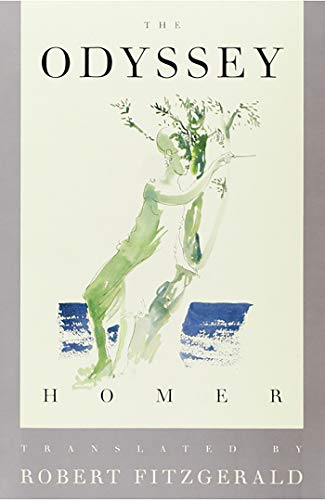
The Aeneid
by Virgil
"Fitzgerald's [translation] is so decisively the best modern Aeneid that it is unthinkable that anyone will want to use any other version for a long time to come." —New York Review of Books Virgil's great epic transforms the Homeric tradition into a triumphal statement of the Roman civilizing mission—translated by Robert Fitzgerald.


Book
Alice's Adventures in Wonderland
by Lewis Carroll
First published in 1865, these endearing tales of an imaginative child's dream world by Lewis Carroll, pen name for Charles Lutwidge Dodgson, are written with charming simplicity. While delighting children with a heroine who represents their own thoughts and feelings about growing up, the tale is appreciated by adults as a gentle satire on education, politics, literature, and Victorian life in general. All the delightful and bizarre inhabitants of Wonderland are here: the White Rabbit and the Cheshire Cat, the hooka-smoking Caterpillar and the Mad Hatter, the March Hare and the Ugly Duchess. . . and, of course, Alice herself - growing alternately taller and smaller, attending demented tea parties and eccentric croquet games, observing everything with clarity and rational amazement.

Book
The Bell Jar
by Sylvia Plath
The Bell Jar chronicles the crack-up of Esther Greenwood: brilliant, beautiful, enormously talented, and successful, but slowly going under--maybe for the last time. Sylvia Plath masterfully draws the reader into Esther's breakdown with such intensity that Esther's insanity becomes completely real and even rational, as probable and accessible an experiece as going to the movies. Such deep penetration into the dark and harrowing corners of the psyche is an extraordinary accomplishment and has made The Bell Jar a haunting American classic.

Book
Pride and Prejudice
by Jane Austen
Nominated as one of America’s best-loved novels by PBS’s The Great American Read “It is a truth universally acknowledged, that a single man in possession of a good fortune must be in want of a wife.” So begins Pride and Prejudice, Jane Austen’s witty comedy of manners—one of the most popular novels of all time—that features splendidly civilized sparring between the proud Mr. Darcy and the prejudiced Elizabeth Bennet as they play out their spirited courtship in a series of eighteenth-century drawing-room intrigues. Renowned literary critic and historian George Saintsbury in 1894 declared it the “most perfect, the most characteristic, the most eminently quintessential of its author’s works,” and Eudora Welty in the twentieth century described it as “irresistible and as nearly flawless as any fiction could be.”


Book
A Farewell to Arms
by Ernest Hemingway
Ernest Hemingway’s classic novel of love during wartime. Written when Ernest Hemingway was thirty years old and lauded as the best American novel to emerge from World War I, A Farewell to Arms is the unforgettable story of an American ambulance driver on the Italian front and his passion for a beautiful English nurse. Set against the looming horrors of the battlefield, this gripping, semiautobiographical work captures the harsh realities of war and the pain of lovers caught in its inexorable sweep. Hemingway famously rewrote the ending to A Farewell to Arms thirty-nine times to get the words right. A classic novel of love during wartime, “A Farewell to Arms stands, more than eighty years after its first appearance, as a towering ornament of American literature” (The Washington Times).

Book
Things Fall Apart
by Chinua Achebe
“A true classic of world literature . . . A masterpiece that has inspired generations of writers in Nigeria, across Africa, and around the world.” —Barack Obama “African literature is incomplete and unthinkable without the works of Chinua Achebe.” —Toni Morrison Nominated as one of America’s best-loved novels by PBS’s The Great American Read Things Fall Apart is the first of three novels in Chinua Achebe's critically acclaimed African Trilogy. It is a classic narrative about Africa's cataclysmic encounter with Europe as it establishes a colonial presence on the continent. Told through the fictional experiences of Okonkwo, a wealthy and fearless Igbo warrior of Umuofia in the late 1800s, Things Fall Apart explores one man's futile resistance to the devaluing of his Igbo traditions by British political andreligious forces and his despair as his community capitulates to the powerful new order. With more than 20 million copies sold and translated into fifty-seven languages, Things Fall Apart provides one of the most illuminating and permanent monuments to African experience. Achebe does not only capture life in a pre-colonial African village, he conveys the tragedy of the loss of that world while broadening our understanding of our contemporary realities.

Book
All Quiet on the Western Front
by Erich Maria Remarque
The masterpiece of the German experience during World War I, considered by many the greatest war novel of all time—with an Oscar–winning film adaptation now streaming on Netflix. “[Erich Maria Remarque] is a craftsman of unquestionably first rank.”—The New York Times Book Review I am young, I am twenty years old; yet I know nothing of life but despair, death, fear, and fatuous superficiality cast over an abyss of sorrow. . . . This is the testament of Paul Bäumer, who enlists with his classmates in the German army during World War I. They become soldiers with youthful enthusiasm. But the world of duty, culture, and progress they had been taught breaks in pieces under the first bombardment in the trenches. Through years of vivid horror, Paul holds fast to a single vow: to fight against the principle of hate that meaninglessly pits young men of the same generation but different uniforms against one another . . . if only he can come out of the war alive.

Book
One Hundred Years of Solitude
by Gabriel García Márquez
The rise and fall, birth and death, of the mythical town of Macondo through the history of the Buendía family.