Crash Course in Economics.
Discover the best economics books for beginners with this curated crash course list. From Freakonomics and Basic Economics to The Wealth of Nations, master key economic principles and ideas from top authors.


Book
Basic Economics 2nd Ed
by Thomas Sowell
Outlines the principles behind each major type of economy including capitalist, socialist, and feudal, in terms of the incentives each creates.

Book
Applied Economics
by Thomas Sowell
A companion volume to Basic Economics discusses the application of economics to such world problems as medical care, discrimination, and the development of nations, examining economic policies in terms of their immediate and longer-term repercussions.

Book
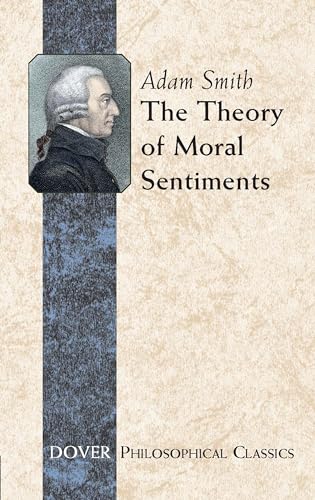
The Wealth of Nations
by Adam Smith
Presents a statement and defense of capitalist economics, first published in the late eighteenth century by Scottish scholar Adam Smith.

Book
Capitalism
by Ayn Rand
In this series of essays, Ayn Rand presents her stand on the persecution of big business, the causes of war, the default of conservatism, and the evils of altruism. The foundations of capitalism are being battered by a flood of altruism, which is the cause of the modern world's collapse. This is the view of Ayn Rand, a view so radically opposed to prevailing attitudes that it constitutes a major philosophic revolution. Here is a challenging new look at modern society by one of the most provocative intellectuals on the American scene. This edition includes two articles by Ayn Rand that did not appear in the hardcover edition: “The Wreckage of the Consensus,” which presents the Objectivists’ views on Vietnam and the draft; and “Requiem for Man,” an answer to the Papal encyclical Progresso Populorum.

Book
Freakonomics Rev Ed
by Steven D. Levitt
Which is more dangerous, a gun or a swimming pool? What do schoolteachers and sumo wrestlers have in common? Why do drug dealers still live with their moms? How much do parents really matter? How did the legalization of abortion affect the rate of violent crime? These may not sound like typical questions for an econo-mist to ask. But Steven D. Levitt is not a typical economist. He is a much-heralded scholar who studies the riddles of everyday life—from cheating and crime to sports and child-rearing—and whose conclusions turn conventional wisdom on its head. Freakonomics is a groundbreaking collaboration between Levitt and Stephen J. Dubner, an award-winning author and journalist. They usually begin with a mountain of data and a simple question. Some of these questions concern life-and-death issues; others have an admittedly freakish quality. Thus the new field of study contained in this book: freakonomics. Through forceful storytelling and wry insight, Levitt and Dubner show that economics is, at root, the study of incentives—how people get what they want, or need, especially when other people want or need the same thing. In Freakonomics, they explore the hidden side of . . . well, everything. The inner workings of a crack gang. The truth about real-estate agents. The myths of campaign finance. The telltale marks of a cheating schoolteacher. The secrets of the Klu Klux Klan. What unites all these stories is a belief that the modern world, despite a great deal of complexity and downright deceit, is not impenetrable, is not unknowable, and—if the right questions are asked—is even more intriguing than we think. All it takes is a new way of looking. Freakonomics establishes this unconventional premise: If morality represents how we would like the world to work, then economics represents how it actually does work. It is true that readers of this book will be armed with enough riddles and stories to last a thousand cocktail parties. But Freakonomics can provide more than that. It will literally redefine the way we view the modern world.