Frankfurt School Essentials

Explore the Frankfurt School Essentials, a curated reading list featuring critical theory classics like One-Dimensional Man by Herbert Marcuse and The Origins of Totalitarianism by Hannah Arendt.


The dialectical imagination Cover
Book

The dialectical imagination


No summary available.
The Frankfurt School Cover
Book

The Frankfurt School


No summary available.
The Essential Frankfurt school reader Cover
Book

The Essential Frankfurt school reader


No summary available.
The culture industry Cover
Book

The culture industry


No summary available.
The Stars Down to Earth Cover
Book

The Stars Down to Earth


No summary available.
Minima Moralia Cover
Book

Minima Moralia


No summary available.
Dialectic of enlightenment Cover
Book

Dialectic of enlightenment


No summary available.
Eclipse of reason Cover
Book

Eclipse of reason


No summary available.
Critical theory Cover
Book

Critical theory


No summary available.
Selected writings Cover
Book

Selected writings


No summary available.
Walter Benjamin Cover
Book

Walter Benjamin


No summary available.
Walter Benjamin Cover
Book

Walter Benjamin


No summary available.
Walter Benjamin Cover
Book

Walter Benjamin


No summary available.
The Arcades Project Cover
Book

The Arcades Project


No summary available.
Reason and revolution Cover
Book

Reason and revolution


No summary available.
Eros and Civilization  Cover
Book

Eros and Civilization


No summary available.
One-Dimensional Man Cover
Book

One-Dimensional Man

by Herbert Marcuse

Originally published in 1964, One-Dimensional Man quickly became one of the most important texts in the ensuing decade of radical political change. This second edition, newly introduced by Marcuse scholar Douglas Kellner, presents Marcuse's best-selling work to another generation of readers in the context of contemporary events.
The Origins of Totalitarianism Cover
Book

The Origins of Totalitarianism

by Hannah Arendt

"How could such a book speak so powerfully to our present moment? The short answer is that we, too, live in dark times, even if they are different and perhaps less dark, and "Origins" raises a set of fundamental questions about how tyranny can arise and the dangerous forms of inhumanity to which it can lead." Jeffrey C. Isaac, The Washington Post Hannah Arendt's definitive work on totalitarianism and an essential component of any study of twentieth-century political history The Origins of Totalitarianism begins with the rise of anti-Semitism in central and western Europe in the 1800s and continues with an examination of European colonial imperialism from 1884 to the outbreak of World War I. Arendt explores the institutions and operations of totalitarian movements, focusing on the two genuine forms of totalitarian government in our time--Nazi Germany and Stalinist Russia--which she adroitly recognizes were two sides of the same coin, rather than opposing philosophies of Right and Left. From this vantage point, she discusses the evolution of classes into masses, the role of propaganda in dealing with the nontotalitarian world, the use of terror, and the nature of isolation and loneliness as preconditions for total domination.

The human condition Cover
Book

The human condition


No summary available.
On violence Cover
Book

On violence


No summary available.
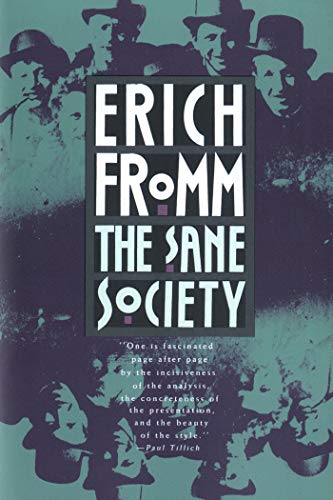
The sane society Cover
Book

The sane society


No summary available.
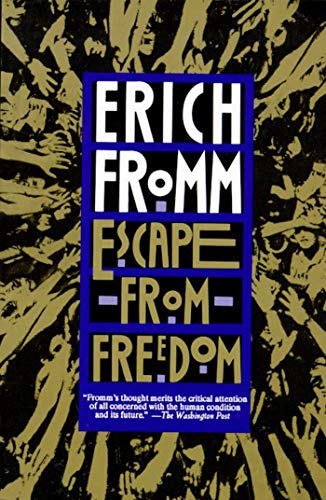
Escape from freedom Cover
Book

Escape from freedom


No summary available.
Man for himself Cover
Book

Man for himself


No summary available.
The Structural Transformation of the Public Sphere Cover
Book

The Structural Transformation of the Public Sphere


No summary available.
The philosophical discourse of modernity Cover
Book

The philosophical discourse of modernity


No summary available.