General Systems Theory / Systems Thinking
Explore the foundations of General Systems Theory and Systems Thinking with this curated reading list. Featuring essential books on cybernetics and information theory, including Norbert Wiener's *Cybernetics* and John Robinson Pierce's *An Introduction to Information Theory*, this collection is ideal for those studying complex systems, computational models, and interdisciplinary thought.




Book
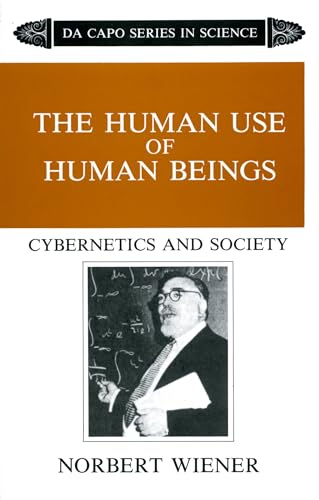
Cybernetics
by Norbert Wiener
It appers impossible for anyone seriously interested in our civilization to ignore this book. It is a 'must' book for those in every branch of science . . . in addition, economists, politicians, statesmen, and businessmen cannot afford to overlook cybernetics and its tremendous, even terrifying implications.


Book
An introduction to information theory
by John Robinson Pierce
Behind the familiar surfaces of the telephone, radio, and television lies a sophisticated and intriguing body of knowledge known as information theory. This is the theory that has permeated the rapid development of all sorts of communication, from color television to the clear transmission of photographs from the vicinity of Jupiter. Even more revolutionary progress is expected in the future. To give a solid introduction to this burgeoning field, J. R. Pierce has revised his well-received 1961 study of information theory for an up-to-date second edition. Beginning with the origins of the field, Dr. Pierce follows the brilliant formulations of Claude Shannon and describes such aspects of the subject as encoding and binary digits, entropy. language and meaning, efficient encoding , and the noisy channel. He then goes beyond the strict confines of the topic to explore the ways in which information theory relates to physics, cybernetics, psychology, and art. Mathematical formulas are introduced at the appropriate points for the benefit of serious students. A glossary of terms and an appendix on mathematical notation are provided to help the less mathematically sophisticated. J. R. Pierce worked for many years at the Bell Telephone Laboratories, where he became Director of Research in Communications Principles. He is currently affiliated with the engineering department of the California Institute of Technology. While his background is impeccable, Dr. Pierce also possesses an engaging writing style that makes his book all the more welcome. An Introduction to Information Theory continues to be the most impressive non-technical account available and a fascinating introduction to the subject for laymen. "An uncommonly good study. . . . Pierce's volume presents the most satisfying discussion to be found."? Scientific American.