IV: Beyond Within
Discover profound books on spirituality, philosophy, and language. Explore C.S. Lewis's The Screwtape Letters, Umberto Eco's Semiotics, and Rudolf Steiner's esoteric wisdom in this curated reading list.


Book
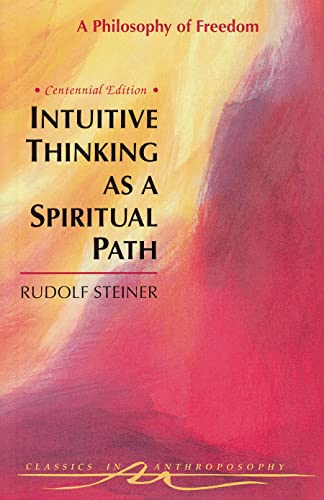
How to Know Higher Worlds
by Rudolf Steiner
This is the classic account of the modern Western esoteric path of initiation made public by Steiner in 1904. He begins with the premise that "the capacities by which we can gain insights into the higher worlds lie dormant within each one of us." Steiner carefully and precisely leads the reader from the cultivation of the fundamental soul attitudes of reverence and inner tranquility to the development of inner life through the stages of preparation, illumination, and initiation. Steiner provides practical exercises of inner and outer observation and moral development. By patiently and persistently following his guidelines, new "organs" of soul and spirit begin to form, which reveal the contours of the higher worlds thus far concealed from us. Steiner in this important work becomes a teacher, a counselor, and a friend whose advice is practical, clear, and effective. The challenges we face in life require increasingly deeper levels of understanding, and Steiner's text helps readers to cultivate the capacities for such insights and places them at the service of humanity. This is Steiner's most essential guide to the modern path of initiation he advocated throughout his life. It has been translated into many languages and has inspired hundreds of thousands of readers around the world. How to Know Higher Worlds has been admired by some of the most brilliant minds of our time. Contents: Foreword by Arthur Zajonc Prefaces by Rudolf Steiner How to Know Higher Worlds The Stages of Initiation Initiation Practical Considerations Requirements for Esoteric Training Some Effects of Initiation Changes in the Dream Life of the Esoteric Student Achieving Continuity of Consciousness The Splitting of the Personality in Esoteric Training The Guardian of the Threshold Life and Death: The Great Guardian of the Threshold Epilogue (1918) Afterword by Arthur Zajonc Index "A true classic of spiritual literature. It is one of the best ways I know for opening up one's life to the spiritual realms in a manner that is balanced, integrated, and loving. It is the product of a great soul who pointed out new routes into the interior." --David Spangler, author of Blessing: The Art and the Practice "It is not only a personal guide to the spirit, but also a path through self-knowledge to compassionate action in the world."--Arthur Zajonc, author of Catching the Light: The Entwined History of Light and Mind

Book
Kant and the Platypus
by Umberto Eco
A collection of essays discusses such topics as the nature of perception, the semiotic links between cognition and language, and iconism, with imaginative fables featuring animal heroes to illustrate the main points.

Book
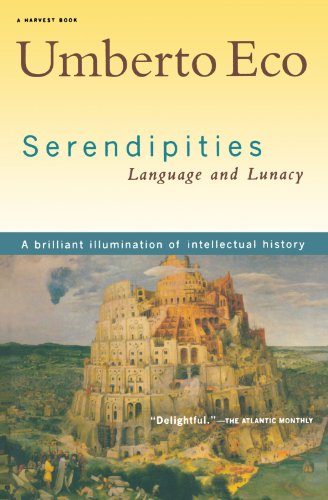
Semiotics and the Philosophy of Language
by Umberto Eco
"Eco wittily and enchantingly develops themes often touched on in his previous works, but he delves deeper into their complex nature . . . this collection can be read with pleasure by those unversed in semiotic theory." —Times Literary Supplement
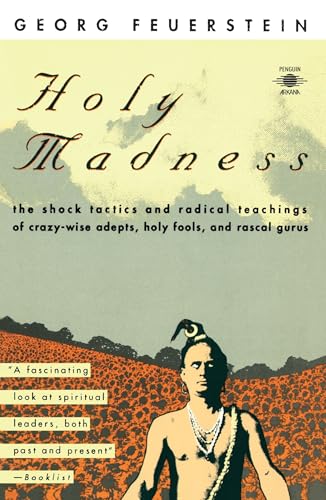


Book
The Screwtape Letters
by C. S. Lewis
In this humorous and perceptive exchange between two devils, C. S. Lewis delves into moral questions about good vs. evil, temptation, repentance, and grace. Through this wonderful tale, the reader emerges with a better understanding of what it means to live a faithful life.



Book
The Gnostic Gospels
by Elaine Pagels
NATIONAL BESTSELLER • NATIONAL BOOK AWARD WINNER • NATIONAL BOOK CRITICS CIRCLE WINNER • SELECTED BY THE MODERN LIBRARY AS ONE OF THE 100 BEST NONFICTION BOOKS • The landmark study exploring alternative perspectives of early Christianity as revealed through the Nag Hammadi texts that could have shaped the religion differently if included in the Christian canon • "[Pagels] is always readable, always deeply informed, always richly suggestive of pathways her readers may wish to follow out for themselves."—Harold Bloom, The Washington Post “[Pagels] writes with the instincts of a novelist, the skill of a scholar, and the ability to sort out significances that many writers lack.”—Chicago Tribune • “An intellectually elegant, concise study . . . The economy with which [Pagels] evokes the world of early Christianity is a marvel.”—The New Yorker The Gnostic Gospels is a work of luminous scholarship and wide popular appeal. First published in 1979 to critical acclaim, winning the National Book Award and the National Book Critics Circle Award, The Gnostic Gospels has continued to grow in reputation and influence. It is now widely recognized as one of the most brilliant and accessible histories of early Christian spirituality published in our time. In 1945 an Egyptian peasant unearthed what proved to be the Gnostic Gospels, thirteen papyrus volumes that expounded a radically different view of the life and teachings of Jesus Christ from that of the New Testament. In this spellbinding book, renowned religious scholar Elaine Pagels elucidates the mysteries and meanings of these sacred texts both in the world of the first Christians and in the context of Christianity today. With insight and passion, Pagels explores a remarkable range of recently discovered gospels, including the Gospel of Thomas and the Gospel of Mary Magdalene, to show how a variety of “Christianities” emerged at a time of extraordinary spiritual upheaval. Some Christians questioned the need for clergy and church doctrine, and taught that the divine could be discovered through spiritual search. Many others, like Buddhists and Hindus, sought enlightenment—and access to God—within. Such explorations raised questions: Was the resurrection to be understood symbolically and not literally? Was God to be envisioned only in masculine form, or feminine as well? Was martyrdom a necessary—or worthy—expression of faith? These early Christians dared to ask questions that orthodox Christians later suppressed—and their explorations led to profoundly different visions of Jesus and his message. Brilliant and stunning in its implications, The Gnostic Gospels is a radical, eloquent reconsideration of the origins of the Christian faith.