Must Reads Volume 2
Discover essential reads in Must Reads Volume 2—from Michael Z. Williamson's fiction to Robert D. Kaplan's political insights and Simon Singh's cryptography classic. Explore history, strategy, and ideas.


Book
The Coming Anarchy
by Robert D. Kaplan
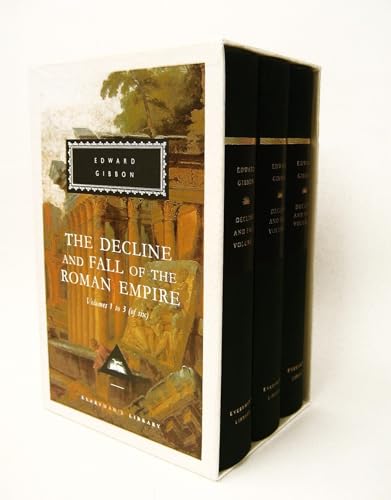
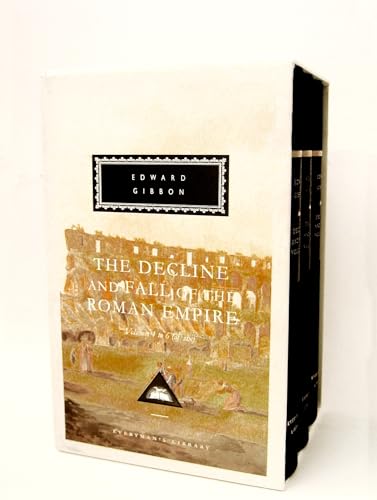
Robert Kaplan, bestselling author of Balkan Ghosts, offers up scrupulous, far-ranging insights on the world to come in a spirited, rousing, and provocative book that has earned a place at the top of the reading lists of the world's policy makers. The end of the Cold War has not ushered in the global peace and prosperity that many had anticipated. Volatile new democracies in Eastern Europe, fierce tribalism in Africa, civil war and ethnic violence in the Near East, and widespread famine and disease—not to mention the brutal rift developing as wealthy nations reap the benefits of seemingly boundless technology while other parts of the world slide into chaos—are among the issues Kaplan identifies as the most important for charting the future of geopolitics. Historical antecedents in Gibbon's Decline and Fall and in the legacies of statesmen such as Henry Kissinger contribute to this bracingly prophetic framework for addressing the new global reality. Bold, erudite, and profoundly important, The Coming Anarchy is a compelling must-read by one of today's most penetrating writers and provocative minds.



Book
The Code Book
by Simon Singh
Codes have decided the fates of empires, countries, and monarchies throughout recorded history. Mary, Queen of Scots was put to death by her cousin, Queen Elizabeth, for the high crime of treason after spymaster Sir Francis Walsingham cracked the secret code she used to communicate with her conspirators. And thus the course of British history was altered by a few sheets of cryptic prose. This is just one link in humankind's evolutionary chain of secret communication, and just one of the fascinating incidents recounted in The Code Book, written by bestselling author Simon Singh. Combining a superb storyteller's sense of drama and a scientist's appreciation for technical perfection, Singh traces the evolution of secret writing from ancient Greek military espionage to the frontiers of computer science. The result is an epic tale of human ingenuity, with examples that range from the poignant to the peculiar to the world-historical. There is the case of the Beale ciphers, which involves Wild West escapades, a cowboy who amassed a vast fortune, a buried treasure worth $20 million, and a mysterious set of encrypted papers describing its whereabouts--papers that have baffled generations of cryptanalysts and captivated hundreds of treasure hunters. A speedier end to a bloody war was the only reward that could be promised to the Allied code breakers of World Wars I and II, whose selfless contributions altered the course of history; but few of them lived to receive any credit for their top-secret accomplishments. Among the most moving of these stories is that of the World War II British code breaker Alan Turing, who gave up a brilliant career in mathematics to devote himself to theAllied cause, only to end his years punished by the state for his homosexuality, while his heroism was ignored. No less heroic were the Navajo code talkers, who volunteered without hesitation to risk their lives for the Allied forces in the Japanese theater, where they were routinely mistaken for the enemy. Interspersed with these gripping stories are clear mathematical, linguistic, and technological demonstrations of codes, as well as illustrations of the remarkable personalities--many courageous, some villainous, and all obsessive--who wrote and broke them. All roads lead to the present day, in which the possibility of a truly unbreakable code looms large. Singh explores this possibility, and the ramifications of our increasing need for privacy, even as it begins to chafe against the stated mission of the powerful and deeply secretive National Security Agency. Entertaining, compelling, and remarkably far-reaching, this is a book that will forever alter your view of history, what drives it, and how private that e-mail you just sent really is. Included in the book is a worldwide Cipher Challenge--a $15,000 award will be given by the author to the first reader who cracks the code successfully. Progress toward the solution will be tracked on The Code Book website.


Book
A Distant Mirror
by Barbara W. Tuchman
A “marvelous history”* of medieval Europe, from the bubonic plague and the Papal Schism to the Hundred Years’ War, by the Pulitzer Prize–winning author of The Guns of August *Lawrence Wright, author of The End of October, in The Wall Street Journal The fourteenth century reflects two contradictory images: on the one hand, a glittering age of crusades, cathedrals, and chivalry; on the other, a world plunged into chaos and spiritual agony. In this revelatory work, Barbara W. Tuchman examines not only the great rhythms of history but the grain and texture of domestic life: what childhood was like; what marriage meant; how money, taxes, and war dominated the lives of serf, noble, and clergy alike. Granting her subjects their loyalties, treacheries, and guilty passions, Tuchman re-creates the lives of proud cardinals, university scholars, grocers and clerks, saints and mystics, lawyers and mercenaries, and, dominating all, the knight—in all his valor and “furious follies,” a “terrible worm in an iron cocoon.” Praise for A Distant Mirror “Beautifully written, careful and thorough in its scholarship . . . What Ms. Tuchman does superbly is to tell how it was. . . . No one has ever done this better.”—The New York Review of Books “A beautiful, extraordinary book . . . Tuchman at the top of her powers . . . She has done nothing finer.”—The Wall Street Journal “Wise, witty, and wonderful . . . a great book, in a great historical tradition.”—Commentary


Book
The Weapon
by Michael Z. Williamson
Kenneth Chinran was a disaffected youth who joined the military and was recruited for an elite deep cover unit, shrugging off training and exercises so tough that several of the recruits did not survive.