Peace of Mind is for Old-School Fools & New-School Tools
Explore a curated reading list on critical thought, challenging the quest for peace of mind. Featuring books from Ayn Rand, Sartre, and Huxley, this collection digs into philosophy, social science, and provocative takes on modern society.



Book
Brave New World
by Aldous Huxley
Huxley's story shows a futuristic World State where all emotion, love, art, and human individuality have been replaced by social stability. An ominous warning to the world's population, this literary classic is a must-read.



Book
The Holocaust Industry
by Norman G. Finkelstein
Argues that public emphasis on the Holocaust and on reparations serves more to enhance the status of Israel and Jewish elites elsewhere, and to distract attention from other abuses, than to preserve the memory of its victims.




Book
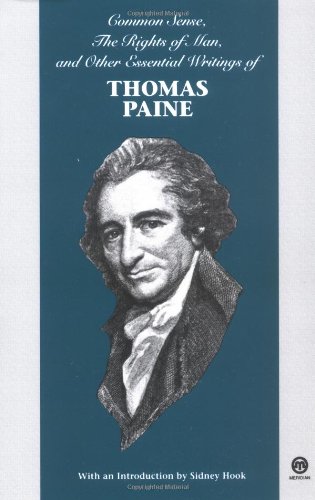
Common sense, The rights of man, and other essential writings of Thomas Paine
No summary available.


Book
Existentialism and Human Emotions
by Jean-Paul Sartre
Proposes that individuals must create their own values, take responsibility for their actions, and find a sense of meaning while living in a universe without purpose.


Book
Capitalism
by Ayn Rand
In this series of essays, Ayn Rand presents her stand on the persecution of big business, the causes of war, the default of conservatism, and the evils of altruism. The foundations of capitalism are being battered by a flood of altruism, which is the cause of the modern world's collapse. This is the view of Ayn Rand, a view so radically opposed to prevailing attitudes that it constitutes a major philosophic revolution. Here is a challenging new look at modern society by one of the most provocative intellectuals on the American scene. This edition includes two articles by Ayn Rand that did not appear in the hardcover edition: “The Wreckage of the Consensus,” which presents the Objectivists’ views on Vietnam and the draft; and “Requiem for Man,” an answer to the Papal encyclical Progresso Populorum.


Book
Manufacturing Consent
by Edward S. Herman
A "compelling indictment of the news media's role in covering up errors and deceptions" (The New York Times Book Review) due to the underlying economics of publishing—from famed scholars Edward S. Herman and Noam Chomsky. With a new introduction. In this pathbreaking work, Edward S. Herman and Noam Chomsky show that, contrary to the usual image of the news media as cantankerous, obstinate, and ubiquitous in their search for truth and defense of justice, in their actual practice they defend the economic, social, and political agendas of the privileged groups that dominate domestic society, the state, and the global order. Based on a series of case studies—including the media’s dichotomous treatment of “worthy” versus “unworthy” victims, “legitimizing” and “meaningless” Third World elections, and devastating critiques of media coverage of the U.S. wars against Indochina—Herman and Chomsky draw on decades of criticism and research to propose a Propaganda Model to explain the media’s behavior and performance. Their new introduction updates the Propaganda Model and the earlier case studies, and it discusses several other applications. These include the manner in which the media covered the passage of the North American Free Trade Agreement and subsequent Mexican financial meltdown of 1994-1995, the media’s handling of the protests against the World Trade Organization, World Bank, and International Monetary Fund in 1999 and 2000, and the media’s treatment of the chemical industry and its regulation. What emerges from this work is a powerful assessment of how propagandistic the U.S. mass media are, how they systematically fail to live up to their self-image as providers of the kind of information that people need to make sense of the world, and how we can understand their function in a radically new way.