Perspectives in Philosophy An Introduction
Explore diverse perspectives in philosophy with this curated introduction. From Hobbes' *Leviathan* to Sartre's *Nausea* and Camus' *Myth of Sisyphus*, discover essential thinkers and texts.










Book
Leviathan
by Thomas Hobbes
He that is to govern a whole nation, must read in himself, not this, or that particular man; but mankind. Leviathan is both a magnificent literary achievement and the greatest work of political philosophy in the English language. Permanently challenging, it has found new applications and new refutations in every generation. This new edition reproduces the first printed text, retaining the original punctuation but modernizing the spelling. It offers the most useful annotation available, an introduction that guides the reader through the complexities of Hobbes's arguments, and a substantial index.


Book
Nausea
by Jean-Paul Sartre
This classic Existentialist novel features a new Introduction by renowned poet, translator, and critic Richard Howard.


Book
The Myth of Sisyphus, and Other Essays
by Albert Camus
One of the most influential works of this century, The Myth of Sisyphus and Other Essays is a crucial exposition of existentialist thought. Influenced by works such as Don Juan and the novels of Kafka, these essays begin with a meditation on suicide; the question of living or not living in a universe devoid of order or meaning. With lyric eloquence, Albert Camus brilliantly posits a way out of despair, reaffirming the value of personal existence, and the possibility of life lived with dignity and authenticity.
Book
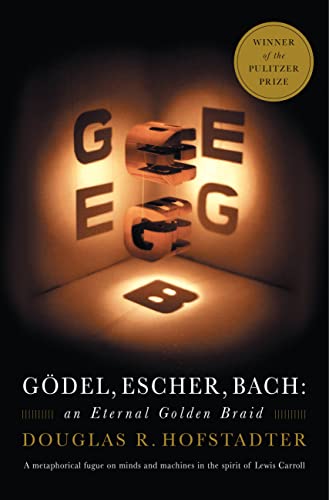
Godel, Escher, Bach
by Douglas R. Hofstadter
Winner of the Pulitzer Prize A metaphorical fugue on minds and machines in the spirit of Lewis Carroll Douglas Hofstadter's book is concerned directly with the nature of "maps" or links between formal systems. However, according to Hofstadter, the formal system that underlies all mental activity transcends the system that supports it. If life can grow out of the formal chemical substrate of the cell, if consciousness can emerge out of a formal system of firing neurons, then so too will computers attain human intelligence. Gödel, Escher, Bach is a wonderful exploration of fascinating ideas at the heart of cognitive science: meaning, reduction, recursion, and much more.