The Greatest Books of Philosophy
Discover the greatest philosophy books of all time, from Machiavelli's The Prince to Nietzsche's Thus Spake Zarathustra and Sartre's Being and Nothingness. Explore timeless works by Heidegger, Derrida, and Lao Tsu in this curated list of essential philosophical texts for deep thinkers.

Book
Being and Nothingness
by Jean-Paul Sartre
Sartre explains the theory of existential psychoanalysis in this treatise on human reality.

Book
Being and Time
by Martin Heidegger
One of the most important philosophical works of our time -- a work that has had tremendous influence on philosophy, literature, and psychology, and has literally changed the intellectual map of the modern world.

Book
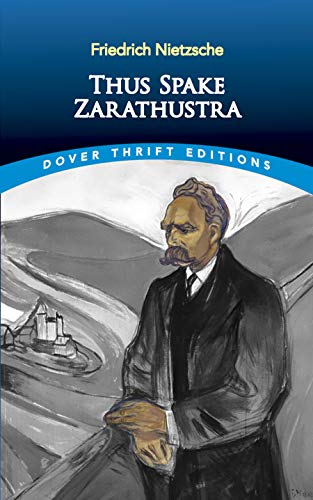
Thus Spake Zarathustra
by Friedrich Wilhelm Nietzsche
The author uses the ancient Persian religious leader, Zarathustra (or Zoroaster) to voice his own views, including the introduction of the controversial doctrine of the "Übermensch" or "superman."



Book
道德经
by Lao Tsu
For nearly two generations, Gia-fu Feng and Jane English's translation of theTao Te Chinghas been the standard for those seeking access to the wisdom of Taoist thought. Now Jane English and her long-time editor, Toinette Lippe, have revised and refreshed the translation so that it more faithfully reflects the Classical Chinese in which it was first written, taking into account changes in our own language and eliminating any lingering infelicities. They have retained the simple clarity of the original rendering of a sometimes seemingly obtuse spiritual text, a clarity that has made this version a classic in itself, selling over a million copies. Written most probably in the sixth century B.C. by Lao Tsu, this esoteric but infintely practical book has been translated into English more frequently than any other work except the Bible. Gia-fu Feng and Jane English's superb translation—the most accessible and authoritative modern English translation—offers the essence of each word and makes Lao Tsu's teaching immediate and alive. This edition includes an introduction and notes by the well-known writer and scholar of philosophy and comparative religion, Jacob Needleman.

Book
The Prince
by Niccolo Machiavelli
Here is the world's most famous master plan for seizing and holding power. Astonishing in its candor The Prince even today remains a disturbingly realistic and prophetic work on what it takes to be a prince . . . a king . . . a president. When, in 1512, Machiavelli was removed from his post in his beloved Florence, he resolved to set down a treatise on leadership that was practical, not idealistic. In The Prince he envisioned would be unencumbered by ordinary ethical and moral values; his prince would be man and beast, fox and lion. Today, this small sixteenth-century masterpiece has become essential reading for every student of government, and is the ultimate book on power politics.

Book
Of Grammatology
by Jacques Derrida
Jacques Derrida's revolutionary theories about deconstruction, phenomenology, psychoanalysis, and structuralism, first voiced in the 1960s, forever changed the face of European and American criticism. The ideas in De la grammatologie sparked lively debates in intellectual circles that included students of literature, philosophy, and the humanities, inspiring these students to ask questions of their disciplines that had previously been considered improper. Thirty years later, the immense influence of Derrida's work is still igniting controversy, thanks in part to Gayatri Spivak's translation, which captures the richness and complexity of the original. This corrected edition adds a new index of the critics and philosophers cited in the text and makes one of contemporary criticism's most indispensable works even more accessible and usable.